The North American Catholic Martyrs and Saints
Before frontiers.
Before awakenings.
Before any new gospel was imagined—
The Gospel was already here.
Catholic missionaries, known as Black Robes, walked into the wilds of North America with nothing but the Cross.
They didn’t preach myth. They lived truth.
They didn’t seek power. They laid down their lives.
- In the 1500s, Franciscans and Dominicans planted missions in Florida, Georgia, New Mexico, and California—teaching, healing, and baptizing. Many were martyred for defending native dignity and refusing to abandon Christ.
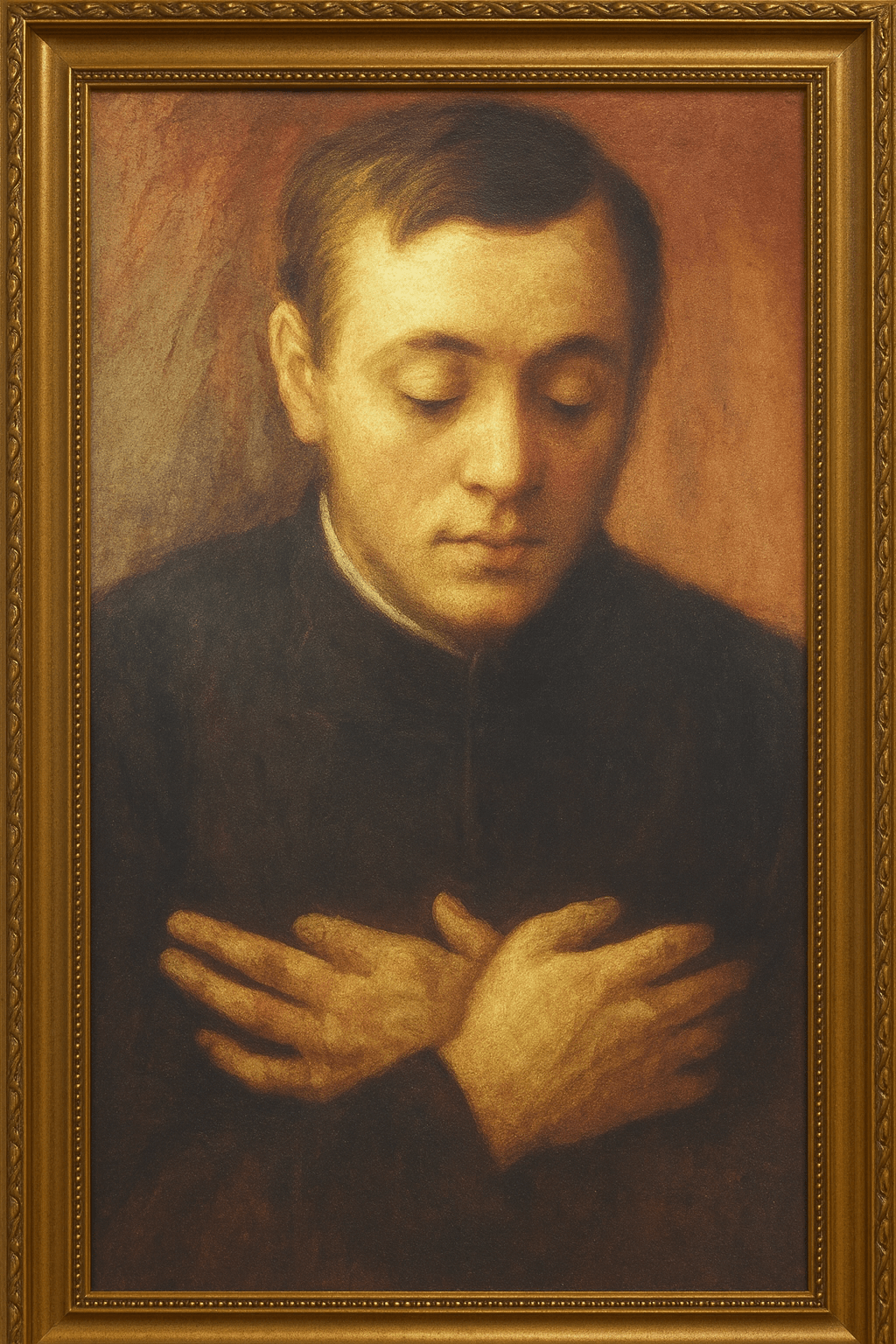
- In the 1600s, Jesuits like St. Isaac Jogues, St. Jean de Brébeuf, and St. Gabriel Lalemant brought the Gospel to the Huron people. They were tortured, burned, and mutilated—yet they forgave and returned with love.
- In Georgia and Florida, more than 100 martyrs, both Native and European, died rather than deny the faith.
These were real men.
With real wounds.
Who preached the real Gospel.
✝️ They brought not a new revelation, but Christ Crucified.
And they sealed that truth with their blood.




🇺🇸 U.S.-Born Saints
St. Elizabeth Ann Seton (1774–1821, New York/Maryland)
First native-born American saint. A convert from Episcopalianism, she founded the first Catholic girls’ school in the U.S. and began the Sisters of Charity, shaping the foundation of Catholic education in America.
St. John Neumann (1811–1860, Philadelphia)
Born in Bohemia, he became the 4th Bishop of Philadelphia. Known for his missionary zeal, he built nearly 100 schools, organized diocesan structure, and introduced the Forty Hours Devotion to the U.S.
St. Katharine Drexel (1858–1955, Philadelphia)
Heiress who gave away her fortune to found the Sisters of the Blessed Sacrament. She dedicated her life to serving Native Americans and African Americans, establishing schools and missions, including Xavier University in New Orleans.
St. Frances Xavier Cabrini (1850–1917, Italy/United States)
First U.S. citizen to be canonized. Founder of the Missionary Sisters of the Sacred Heart, she built 67 institutions—schools, hospitals, orphanages—especially for immigrants. Patron saint of immigrants.
St. Rose Philippine Duchesne (1769–1852, France/Missouri)
A French Sacred Heart nun who came to Missouri at age 49. She opened the first free school west of the Mississippi and later worked among Native Americans, who called her “the woman who prays always.”
Mexican Saints
St. Juan Diego Cuauhtlatoatzin (1474–1548, Mexico City)
Indigenous peasant to whom Our Lady of Guadalupe appeared in 1531. His tilma bearing her miraculous image remains one of the greatest symbols of faith and conversion in the Americas.
St. José Sánchez del Río (1913–1928, Michoacán)
A 14-year-old boy who joined the Cristero War to defend religious freedom. Captured, tortured, and killed, he cried out “¡Viva Cristo Rey!” (Long live Christ the King!) at his martyrdom.
St. Cristóbal Magallanes (1869–1927) & Cristero Martyrs
A parish priest who promoted peace during the Cristero War but was executed by firing squad. Alongside him are 24 other canonized martyrs—priests and laypeople—who gave their lives for the faith.
St. Rafael Guízar y Valencia (1878–1938, Veracruz)
Bishop of Xalapa known as the “Bishop of the Poor.” He disguised himself as a street vendor to bring the sacraments during persecution and dedicated his ministry to evangelization and seminary formation.
🇨🇦 Canadian Saints
St. André Bessette (1845–1937, Montreal)
A humble Holy Cross brother, frail in health and uneducated, who became known as the “Miracle Man of Montreal.” He promoted devotion to St. Joseph, leading to the building of the great St. Joseph’s Oratory.
St. Marguerite Bourgeoys (1620–1700, Montreal)
Founder of the Congregation of Notre Dame, she pioneered education for girls in New France and is considered the “Mother of the Colony.”
St. Marguerite d’Youville (1701–1771, Montreal)
First Canadian-born saint. Widowed young, she founded the Grey Nuns and cared for the poor, sick, and abandoned, transforming Montreal’s social services.
St. Marie of the Incarnation (1599–1672, Quebec)
A French Ursuline missionary and mystic, she founded the Ursulines in Quebec, becoming a cornerstone of Catholic education in New France. Called the “Mother of the Canadian Church.”
St. François de Laval (1623–1708, Quebec)
First bishop of Quebec and founder of the Seminary of Quebec, which trained clergy for all of New France. A man of great humility, he walked miles to minister to remote missions.
More Popular Catholic Saints


1. Saint Justin Martyr (c. 100–165 A.D.)
Justin was born a pagan philosopher, thirsty for truth. He explored Stoicism, Platonism, and other philosophies, but found them lacking. One day, while walking by the sea, he encountered an old man who spoke to him of the prophets and Jesus Christ. The encounter pierced his soul. Justin embraced Christianity and became one of the first great Christian apologists, writing to the Emperor himself to explain the reasonableness of Christian worship. He was eventually arrested for refusing to worship Roman gods. When questioned, he boldly declared: “I do not suppose—I know and am fully persuaded of it.” He was scourged and beheaded along with six companions.
2. Saints Perpetua and Felicity (d. 203 A.D.)
Perpetua, a wealthy noblewoman, and Felicity, her servant, were both young mothers arrested during a Roman persecution. Perpetua’s father pleaded with her to deny her faith for the sake of her baby. She answered, “I am a Christian and cannot be called anything else.” In prison, Felicity gave birth to her child just days before execution. In the arena, they were mauled by beasts and then put to the sword. Before dying, they embraced each other as sisters in Christ, radiant in courage and faith.
3. Saint Isaac Jogues (1607–1646)
A French Jesuit missionary, Jogues traveled to New France (Canada) to evangelize the Huron and Iroquois tribes. Captured by the Mohawks, he was tortured brutally—his fingers were chewed off, and he was treated as a slave. Eventually, he escaped and returned to France, where he was hailed as a living martyr. Yet he asked permission to celebrate Mass with mutilated hands and astonishingly returned to the very people who had tortured him. He was tomahawked to death. His sacrifice bore fruit: his killer later converted and was baptized with the name Isaac.
4. Saint Maximilian Kolbe (1894–1941)
Maximilian was a Polish Franciscan with a deep devotion to Mary. Arrested by the Nazis, he was sent to Auschwitz. When a man in his barracks was selected to die for another’s escape, Kolbe stepped forward and offered his life in exchange. In the starvation bunker, he led men in prayer and hymns. After two weeks, only he remained. He was executed by lethal injection. His self-offering remains one of the most powerful testimonies of love in modern history.
5. Saint Maria Goretti (1890–1902)
At only 11 years old, Maria was attacked by a 20-year-old neighbor, Alessandro Serenelli, who attempted to rape her. She fought him off, crying, “No! It is a sin! God does not want it!” He stabbed her 14 times. On her deathbed, Maria forgave him, saying, “I want him to be with me in heaven.” Years later, Alessandro repented in prison after a dream in which Maria gave him lilies. He became a lay brother in a monastery and testified at her canonization.
6. Saint Lawrence (d. 258 A.D.)
As a deacon in Rome, Lawrence was ordered to hand over the treasures of the Church. He returned with the poor, sick, and outcast, declaring, “These are the treasures of the Church.” Furious, the Roman officials roasted him alive on a gridiron. He’s famously said to have joked while dying: “Turn me over—I’m done on this side!” His fearless joy in the face of death made him a beloved martyr.
7. Saint Polycarp (c. 69–155 A.D.)
A disciple of the Apostle John, Bishop Polycarp was arrested in his old age. When ordered to curse Christ, he answered, “Eighty-six years I have served Him, and He has never done me wrong. How can I blaspheme my King who saved me?” They tried to burn him alive, but the flames would not consume him. Finally, he was stabbed to death. His martyrdom is one of the earliest recorded outside of Scripture.
8. Saint Cecilia (2nd century)
A Roman noblewoman, Cecilia was forced into marriage but remained a virgin, converting her husband and brother-in-law to Christianity. When arrested, she survived an attempted suffocation. After a failed beheading, she lingered for three days, continuing to pray and offer praise to God. She is the patron saint of musicians, remembered for the song of faith she sang with her life and death.
9. Saint Sebastian (d. c. 288 A.D.)
A captain in the Roman army, Sebastian was a secret Christian who used his position to help persecuted believers. Discovered and condemned, he was tied to a tree and shot full of arrows—left for dead. A Christian widow found him alive and nursed him back to health. He boldly returned to the emperor to denounce the persecution. He was then beaten to death and thrown into a sewer.
10. Saint Joan of Arc (1412–1431)
A teenage peasant girl, Joan claimed to hear heavenly voices telling her to lead France to victory against the English. She was given command of an army and lifted the siege of Orléans. Captured and handed over to English-backed Church authorities, she was tried for heresy. Refusing to recant her visions, she was burned at the stake at age 19, whispering Jesus’ name as the flames rose. Twenty-five years later, her sentence was reversed. She is now a patroness of France.
11. Saint Catherine of Siena (1347–1380)
From a young age, Catherine had visions of Christ and made a vow of virginity. She later became a spiritual advisor to popes, helped bring the papacy back to Rome from Avignon, and worked to heal divisions in the Church. Though she lived on the Eucharist alone for long periods, she tirelessly served the sick and poor. She received the stigmata invisibly and died at 33, consumed by her union with God.
12. Saint Padre Pio (1887–1968)
Born in Italy, Padre Pio became a Capuchin friar and bore the stigmata—wounds of Christ—for over 50 years. Known for his deep prayer life, he heard confessions for hours daily, read souls, and worked countless miracles. Despite skepticism and restrictions from the Vatican, he remained obedient. People traveled from across the globe to encounter his holiness.
13. Saint Damien of Molokai (1840–1889)
A Belgian priest who chose to serve on the Hawaiian island of Molokai, where lepers were exiled. He built homes, churches, and hope. He treated the sick with his own hands and lived among them with dignity and love. He eventually contracted the disease and died among his people, their beloved shepherd and brother.
14. Saint Teresa of Calcutta (1910–1997)
Mother Teresa founded the Missionaries of Charity to serve the poorest of the poor in India and around the world. Though she experienced a long spiritual darkness, she never wavered in her mission. She held dying people in her arms, giving them dignity, love, and the presence of Christ. She received the Nobel Peace Prize and remains a global symbol of selfless service.
15. Saint Ignatius of Antioch (d. c. 107 A.D.)
A disciple of John the Apostle and bishop of Antioch, Ignatius was arrested and marched to Rome for execution. On the journey, he wrote letters to various churches urging unity and obedience to the bishop as a sign of fidelity to Christ. He begged the faithful not to prevent his martyrdom: “Let me be ground by the teeth of the beasts to become the pure bread of Christ.” He was devoured in the Colosseum, his final witness echoing through history.
Back to Main Path
Next Reflection ~Black Robe